Crown reduction in Herne Hill
If you are looking for crown reduction in Herne Hill, you are probably dealing with a tree that has become too large for its space, too heavy in the upper canopy, or simply too close to a building, boundary, driveway, or garden. Crown reduction is one of the most practical tree surgery services for local homeowners, landlords, schools, rural properties, and businesses that need trees managed carefully without removing them altogether.
In and around Herne Hill, many trees sit in exposed gardens, established plots, roadside settings, and mixed residential areas where space matters. Mature trees can add character, shade, screening, and habitat value, but when they start to overhang roofs, shade out gardens, interfere with light, or put strain on branches, a professional reduction can make a real difference. The aim is not to butcher the tree or make it look harsh; it is to shape, balance, and manage growth in a way that suits the tree and the property.
Whether you need help with a large garden tree, a row of boundary trees, or a specimen tree in a commercial setting, a local team can assess the structure, work safely, and recommend the right approach. Contact us today if you want clear advice on whether crown reduction is the right option for your tree.
What crown reduction means for Herne Hill property owners
Crown reduction involves reducing the overall height and/or spread of a tree by carefully shortening selected branches back to suitable growth points. It is different from simple trimming or topping. A proper reduction aims to keep the tree healthy, visually balanced, and structurally sound while lowering its size and weight.
For customers in Herne Hill, this service is often requested when trees begin to dominate smaller gardens, block natural light, or become awkward near houses, sheds, garages, farm buildings, patios, and access routes. In many cases, a reduction can restore proportion without removing a tree that still has value to the property and the landscape.
It is also useful when a tree has grown unevenly after years of reaching towards light or after previous pruning has left it lopsided. A skilled arborist can reduce the crown in a way that respects the tree’s natural shape and limits stress on the remaining structure.
Why people ask for crown reduction locally
Herne Hill properties vary from traditional homes with mature boundary planting to more open plots and rural-style settings where trees have room to grow, until suddenly they do not. Local customers commonly ask about crown reduction for practical reasons such as:
- Reducing shade in gardens, courtyards, or allotment spaces
- Preventing branches from overhanging roofs or gutters
- Creating clearance over driveways, paths, and parking areas
- Lessening movement in windy conditions on exposed sites
- Managing trees that are too large for a small plot
- Improving the appearance of a tree that has become uneven
- Maintaining light for neighbouring properties or commercial premises
In villages and surrounding rural parts of Kent, tree work often needs to balance usefulness with appearance. Many customers do not want trees removed if they can be retained safely and attractively. Crown reduction can be the middle ground: a way to keep the tree while making the space more usable.
Done properly, it can improve both the tree’s relationship with the property and the day-to-day feel of the outdoor space.
How a professional crown reduction is carried out
A good crown reduction starts with assessment. A tree specialist will look at the species, size, health, branch structure, recent growth, and any signs of stress, decay, or damage. The team will also consider the location, access, targets below, and what level of reduction is appropriate for the species and condition of the tree.
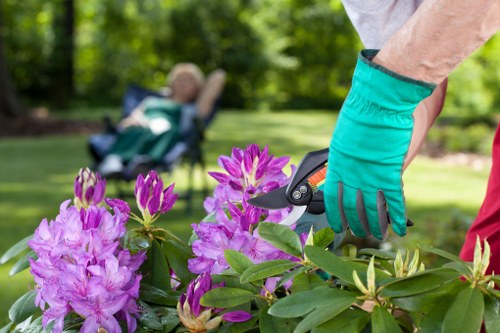
The work itself is carried out by selectively shortening branches to suitable points, rather than simply cutting everything back to the same length. The final result should look natural, with the tree retaining a balanced outline. Depending on the tree and the agreed scope, the team may also remove deadwood, crossing branches, or weak growth that could fail later.
In many cases, the process is done from rope and harness, with additional ground support if needed. This is especially useful where access is limited, the tree is close to structures, or there is a need to protect lawns, beds, fences, and hard landscaping. Safety and control matter just as much as appearance.
What is included in the service
If you book crown reduction in Herne Hill, you would typically expect a service that is focused on both tree health and convenience for the customer. While exact details vary from site to site, a professional job commonly includes:
- Initial site assessment and discussion of your aims
- Advice on whether reduction, thinning, pruning, or removal is most suitable
- Safe climbing or access methods where required
- Selective branch shortening to reduce height and spread
- Careful shaping to preserve a natural appearance
- Removal of debris and brash from the work area
- Optional removal of larger timber where agreed in advance
- Checks for practical concerns such as nearby roofs, wires, or fences
Some customers also ask for related services to be carried out at the same time, such as crown lifting, deadwood removal, hedge cutting, or reduction of neighbouring vegetation. Combining tasks can be helpful where access is limited, particularly if machinery or protective measures need to be brought on site.
Well-planned tree surgery should leave the garden tidy and the tree in a better state for the future, not just smaller for the sake of it.
Tree species and why they matter
Different species react differently to reduction. Fast-growing trees, broadleaf ornamental species, and mature garden trees may all need a tailored approach. A careful local team will factor in regrowth patterns, branch strength, and the time of year to help reduce the risk of excessive stress. That is one reason why professional judgement is so valuable.
Why local knowledge matters in Herne Hill
Choosing a local team for crown reduction in Herne Hill can make a real difference. Local tree surgeons are more likely to understand the type of properties in the area, the access issues that come with village roads and narrow drives, and the needs of customers who want a tidy, respectful service with minimal disruption.
Herne Hill and the surrounding parts of Kent include a mix of homes, gardens, small commercial premises, and rural lanes where equipment access can be awkward. A local crew will typically be better prepared for things like limited turning space, shared boundaries, informal parking arrangements, or trees that sit close to neighbouring land. That kind of experience saves time and helps the job run more smoothly.
Local knowledge also helps when working around common nearby considerations such as schools, community buildings, farm access routes, outbuildings, and mature garden boundaries. The right approach is not only about cutting branches; it is about understanding how the property is used and how the tree fits into its setting.
Residential crown reduction for homes and gardens
For homeowners, crown reduction is often about making everyday life easier. A tree that once felt perfectly placed can gradually become too large for the space available, especially after years of growth or following changes to the garden layout. If your tree is overshadowing a patio, interfering with a vegetable patch, or encroaching on a neighbour’s side, reduction may be the answer.
It can also help when trees are causing concern near rooflines, solar panels, chimney areas, gutters, fences, or conservatories. Rather than letting branches keep pressing into the space, a reduction can create a safer buffer and reduce ongoing maintenance issues. For many households, that means better light, improved views, and less pressure on the property.
There is also a visual benefit. A tree that has become too dominant can make a garden feel enclosed or top-heavy. Thoughtful crown work can restore balance and allow the rest of the outdoor space to breathe again.
Commercial and managed-site tree work
Crown reduction is not just for private gardens. Businesses, landlords, parish settings, care environments, schools, and managed grounds in and around Herne Hill may need regular tree maintenance to keep site users safe and the premises presentable. Trees on commercial sites can affect entrances, lighting, signage, parking bays, and vehicle movement, so reduced crowns often have a practical as well as aesthetic role.
For commercial customers, the focus is often on keeping access routes clear, reducing risk from branch drop, and maintaining a smart appearance for visitors or tenants. A planned tree reduction can be coordinated to minimise interruption to staff, customers, or residents. In busy environments, that matters just as much as the final shape of the tree.
Commercial property managers may also need recurring attention rather than one-off work. If a tree is growing quickly or has recurring conflicts with structures, a longer-term maintenance schedule can help keep the site under control.
Examples of commercial settings
- Retail and service premises
- Schools and educational grounds
- Lettings and rental properties
- Community spaces and shared grounds
- Rural businesses and yards
How to tell whether crown reduction is the right option
Not every tree needs crown reduction. Sometimes crown thinning, crown lifting, selective pruning, or even no action at all is the better answer. That is why a site visit and professional assessment matter. A reduction may be suitable if the tree is otherwise healthy but simply too large, too heavy in one area, or too close to a target below.
You may want to consider this service if you notice any of the following:
- The tree is outgrowing the garden or boundary space
- Branches are shading rooms or outside areas more than before
- The crown is unbalanced, with one side weighing more than the other
- Branches are brushing the house, roof, or nearby structures
- Wind exposure makes the tree feel overly dominant or catch the weather
- You want to keep the tree but reduce its impact on the property
A responsible tree surgeon will always look at the tree first, not just the size issue. If reduction would harm the tree or create poor future growth, another solution may be recommended.
What affects the price of crown reduction?
People often want to know what influences the cost of crown reduction in Herne Hill. While exact pricing can only be given after a survey or quote, several factors usually affect the final figure:
- Tree size and height: larger trees take longer and require more labour
- Species: some trees are more difficult to reduce neatly or safely
- Access: restricted access, narrow driveways, or awkward garden layouts can affect the work
- Location of the tree: proximity to buildings, roads, wires, or neighbouring land can increase complexity
- Amount of material removed: more branch volume means more handling and clearance
- Additional tasks: deadwood removal, hedge work, stump work, or timber removal may add to the scope
It is sensible to request a site-specific quote rather than guessing from photographs alone, especially if access looks tight or if the tree is large and mature. A local team can often spot practical issues early and explain what is involved before any work begins.
If you are comparing options, ask what is included in the quote and whether debris removal, traffic considerations, or specialist access are part of the plan.
Preparation checklist for customers
A little preparation can make the visit smoother and help the team get started promptly. Before the work date, it is useful to:
- Clear access to the tree where possible
- Move vehicles away if branch lowering or loading is likely
- Secure pets and let household members know about the work
- Point out anything fragile nearby, such as ornaments, pots, or garden furniture
- Mention shared boundaries, neighbour concerns, or access arrangements
- Tell the team if there are overhead lines, hidden cables, or drainage features nearby
- Decide in advance whether you want timber left on site, cut into sections, or removed where possible
For business customers, it helps to identify any peak operating times, delivery schedules, or customer access needs so the job can be planned around them. The more information shared upfront, the easier it is to deliver a neat and efficient service.
Before the team arrives
It is also sensible to check whether the tree is subject to any restrictions or whether permission may be needed in your area. If you are unsure, a local arborist can often advise what questions to ask before proceeding. This avoids delays and helps ensure the work is handled correctly from the start.
What happens during the visit
Customers often appreciate knowing what the day will look like. In many cases, the process is straightforward. The team arrives, reviews the tree and access, confirms the scope, and then begins the reduction carefully and methodically. Branches are removed in stages, lowered safely when necessary, and taken away from the working area as the job progresses.
Good communication is important throughout. If a team encounters something unexpected, such as decay, storm damage, hidden obstruction, or a structural issue in the tree, they should discuss it with you rather than pushing ahead blindly. That approach protects both the tree and the property.
Once the reduction is complete, the area should be tidied and any agreed waste removed. For many customers, the satisfaction comes from seeing a tree that still looks natural but no longer overwhelms the space.
Aftercare and follow-up
Some trees will need monitoring after a reduction, especially if they were already stressed or are in a high-wind position. You may be advised to watch for regrowth, any signs of dieback, or changes in the way the tree sits in the landscape. Follow-up attention in future seasons can help maintain the shape and safety of the crown.
Why choose a professional instead of a rough cut
It can be tempting to treat a large tree as if it were just another garden task, but crown reduction is a skilled job. A poor cut can leave the tree looking lopsided, encourage weak regrowth, or create wounds that take longer to recover. In the worst cases, unsympathetic work can leave the tree unsafe or shorten its useful life.
A professional service focuses on proportion, branch selection, and long-term tree health. That matters because mature trees are valuable assets. They contribute to privacy, biodiversity, shade, and the appearance of a property. A good reduction aims to keep those benefits while solving the immediate problem of size or spread.
For many customers, the real value is peace of mind: the tree is cared for properly, the site is managed safely, and the result should look intentional rather than hacked back.
Areas covered around Herne Hill
Customers seeking crown reduction in Herne Hill are often also located in the surrounding villages and nearby parts of Kent. A local team is usually well placed to work across a wider area where similar property types and access conditions are common. Typical surrounding places may include nearby rural roads, small settlements, and villages in the local district, subject to the scope of the job and scheduling.
If you live in a location with tight lanes, awkward parking, shared driveways, or a tree close to a boundary line, a nearby service provider is usually easier to coordinate with. That convenience can make a big difference when machinery, climbing access, or debris removal is involved.
For larger jobs or repeat maintenance, it can also be useful to work with a team that already understands the local landscape and the challenges that come with trees in exposed or compact settings.
Frequently asked questions
How much can a tree be reduced?
That depends on the species, condition, structure, and location of the tree. A suitable reduction should be based on arboricultural judgement rather than a fixed measurement. The aim is to reduce size without causing avoidable stress or leaving an unnatural shape.
Will the tree grow back?
Yes, most trees will produce regrowth after reduction. The rate and pattern depend on the species and the time of year. Because regrowth is expected, some trees benefit from periodic maintenance rather than one-off heavy work.
Is crown reduction the same as topping?
No. Topping is a rough cut that removes large sections without regard for natural structure. Crown reduction is a controlled, selective process designed to maintain the tree’s health and appearance.
Can you reduce a tree near a house or fence?
Yes, but the work needs careful planning, safe access, and the right technique. Trees close to buildings, fences, or other features are common in Herne Hill, so a local team should be used to working with those constraints.
Do I need to be home while the work is done?
That depends on access and your preference. Many customers choose to be present at the start to confirm the scope and any site concerns. If the arrangement allows, the team may be able to complete the work with limited interruption.
What if I am not sure whether I need reduction or pruning?
A site visit or detailed discussion can help. Often, the right solution becomes clear once the tree’s structure and the space around it are properly assessed.
Book crown reduction in Herne Hill with confidence
If a tree on your property is becoming too large, too dense, or too close to nearby structures, now is a good time to act before the issue becomes harder to manage. A professionally carried out crown reduction can improve light, restore balance, and make the space safer and easier to use, while still keeping the tree in place.
For homes, rental properties, commercial sites, and rural plots, the right approach is a careful one: assess the tree, agree the scope, complete the work safely, and leave the area tidy. That is what local customers in Herne Hill tend to need from a tree surgery service — practical help, clear communication, and results that look right for the property.
Request a free quote, ask for advice, or book your service now if you are ready to discuss crown reduction in Herne Hill. A local team can help you decide on the best next step and arrange a visit at a time that suits you.